



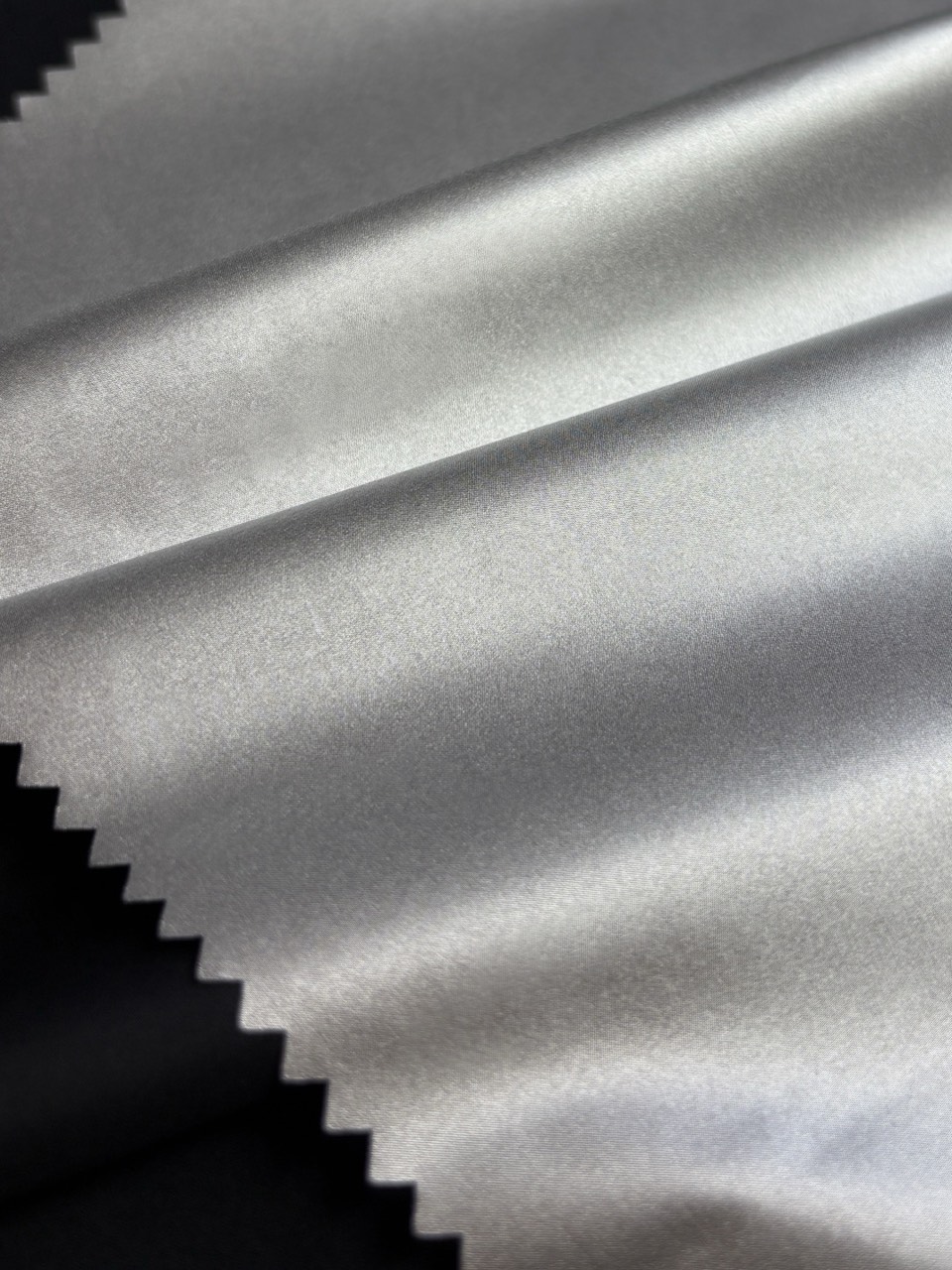
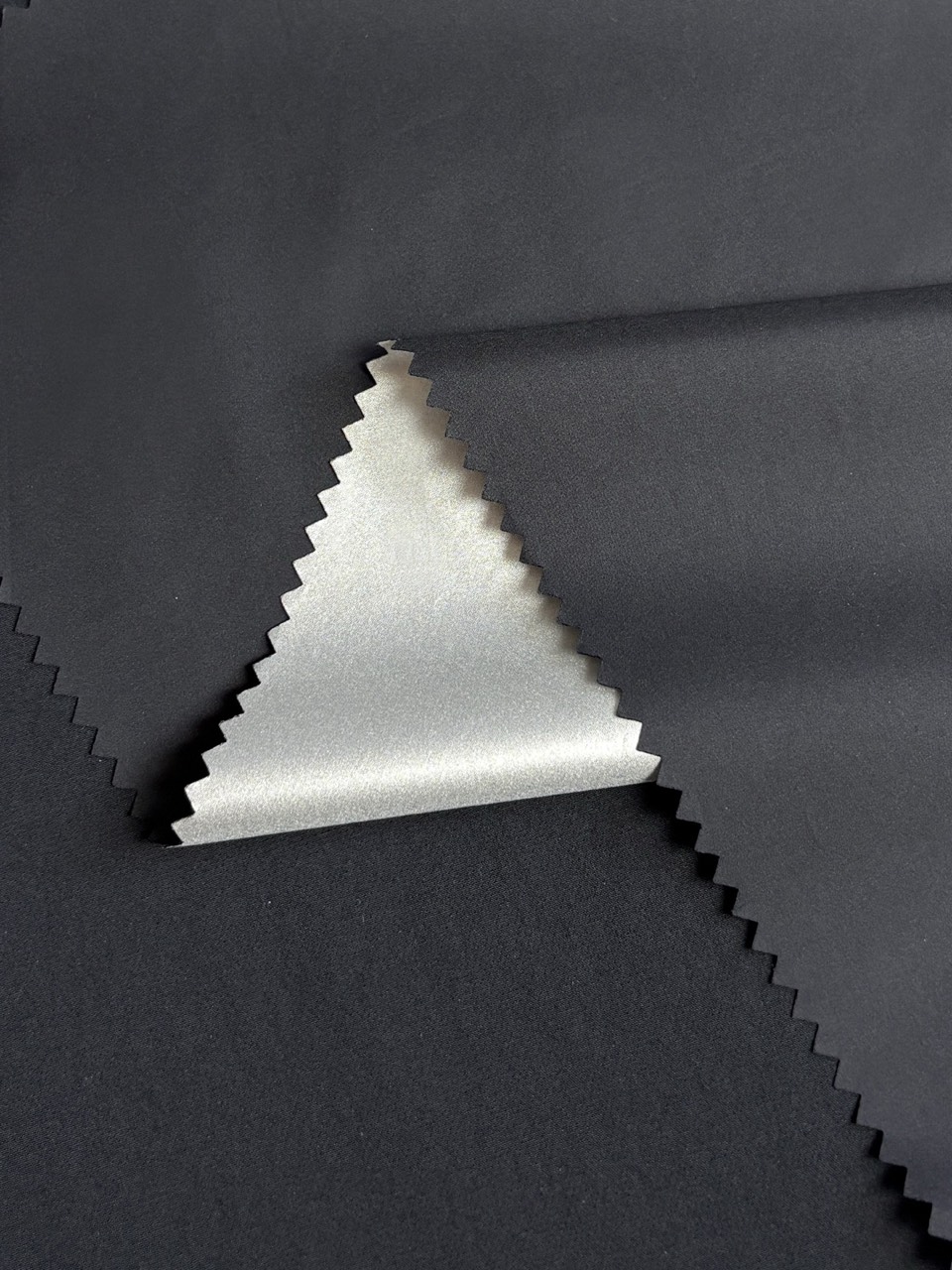
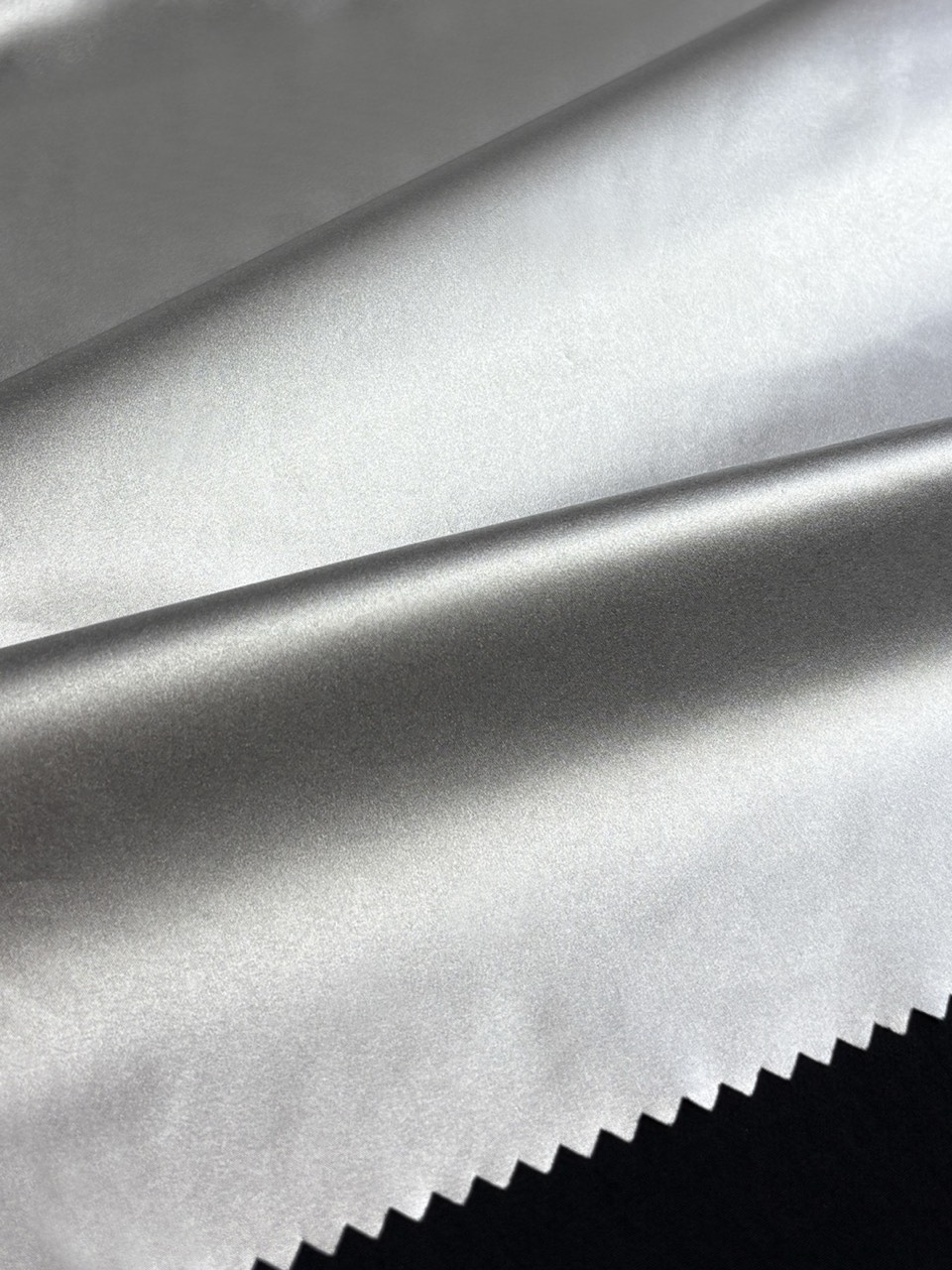
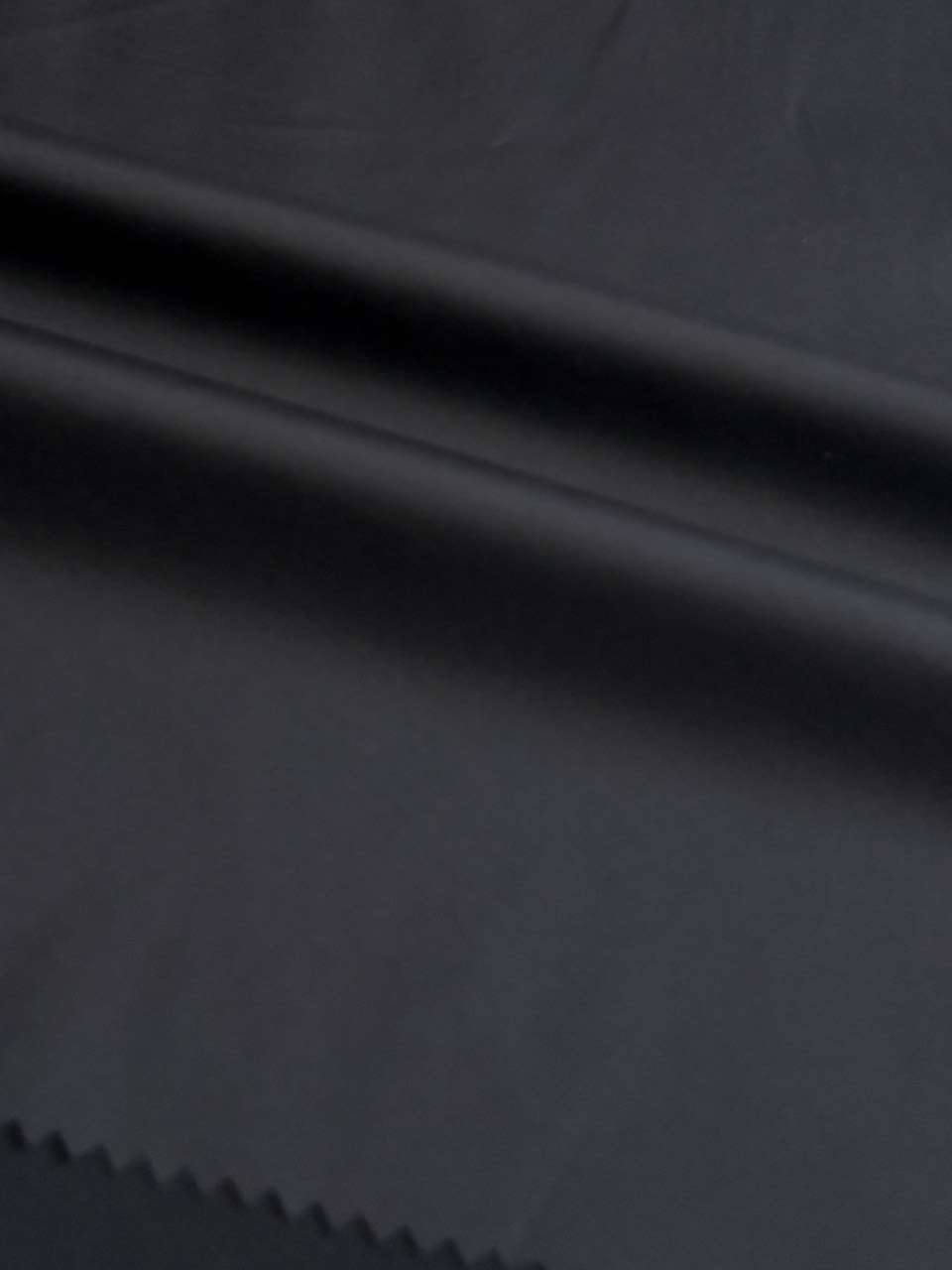
 YK3385
Heat-Reflective Coated Woven Fabric
Heat-Reflective Coated Woven Fabric
- Comp
- 100% Polyester
- Width
- 145CM
- Weight
- 54GSM
- Heat-Reflective
- Lightweight
- Windproof
- Water-Repellent
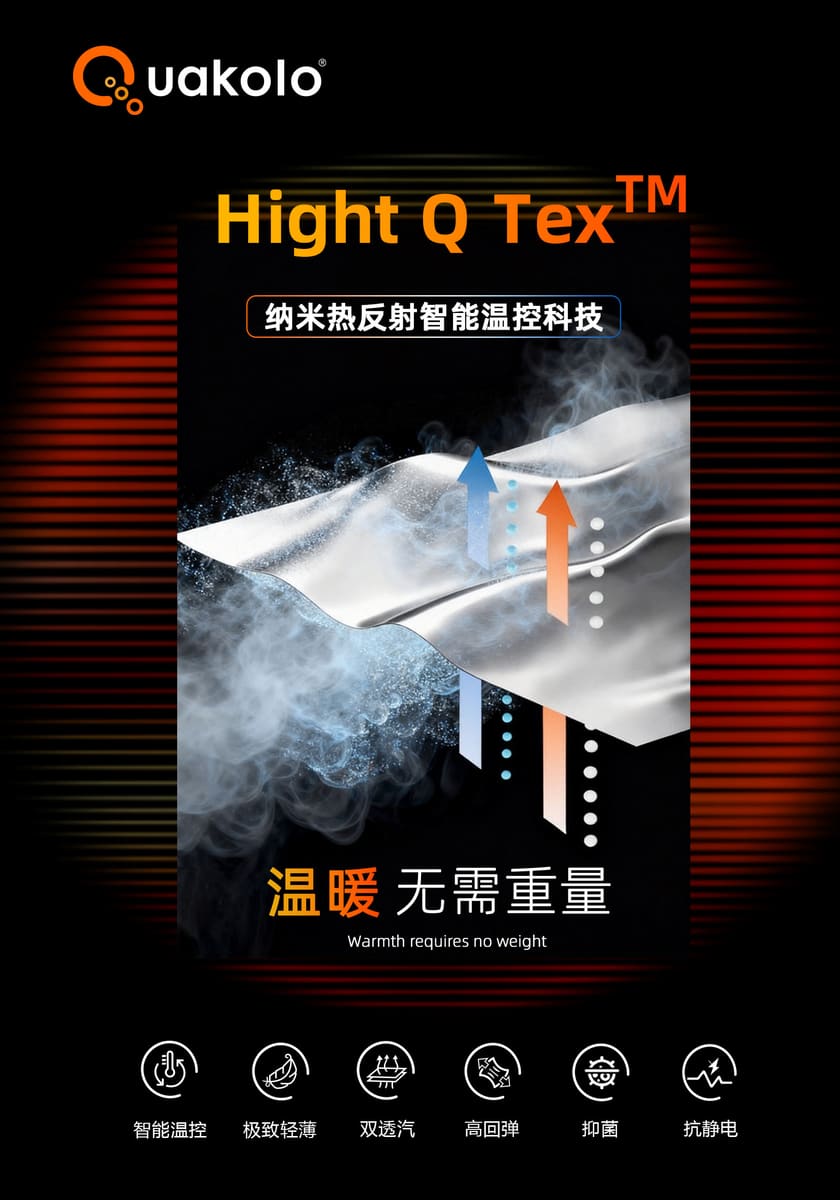
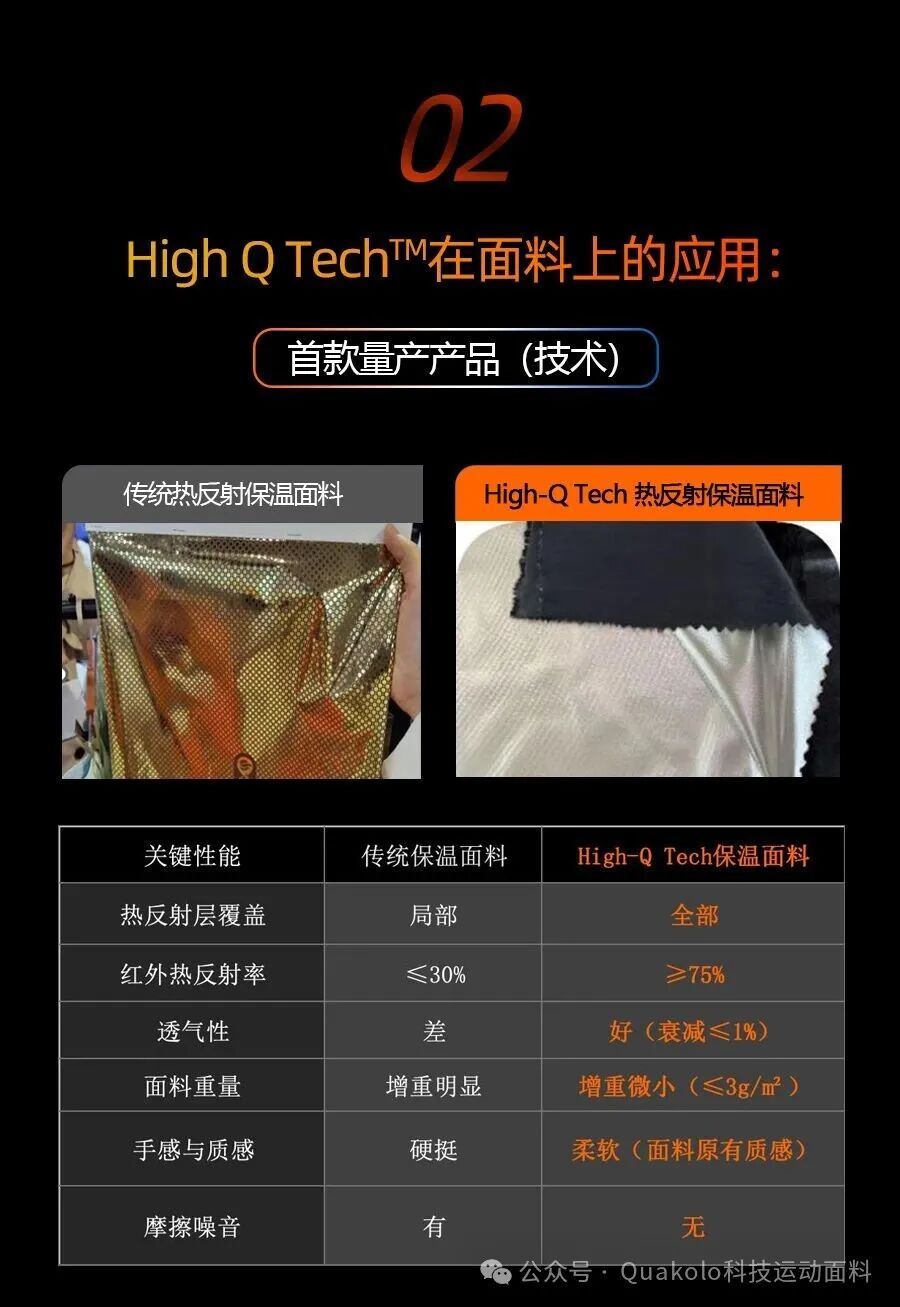
High-Q Tex uses a nano-scale metallic coating to manage far-infrared radiation — warmth from reflection, not from bulk.
Figures are laboratory and production-swatch ranges; final values follow test reports and order confirmation.
The body exchanges heat through four channels: radiation, conduction, convection and evaporation. At rest or low activity, more than half of that heat leaves the skin as far-infrared radiation — precisely the channel that conventional "add more bulk" insulation handles least efficiently.
Emitted as far-infrared waves; dominant at rest in the cold
Direct contact with seats, ground and gear drains heat
Airflow removes the warmed air layer at the skin
Sweat evaporation takes latent heat; grows with intensity
Typical resting shares; varies strongly with intensity, temperature and humidity
Conventional fabrics trap still air between fibers and yarns, suppressing conduction and convection. Radiation is largely untouched: ordinary textiles have an emissivity of about 0.8–0.95, so they absorb and re-emit, and heat still passes through.
At a skin temperature near 30°C, peak thermal radiation sits around 9–10µm, inside the far-infrared band (4–14µm). Metals have very low emissivity and very high reflectance in this band, so a metal layer only a few nanometers thick can fold that escaping radiation back to the skin.
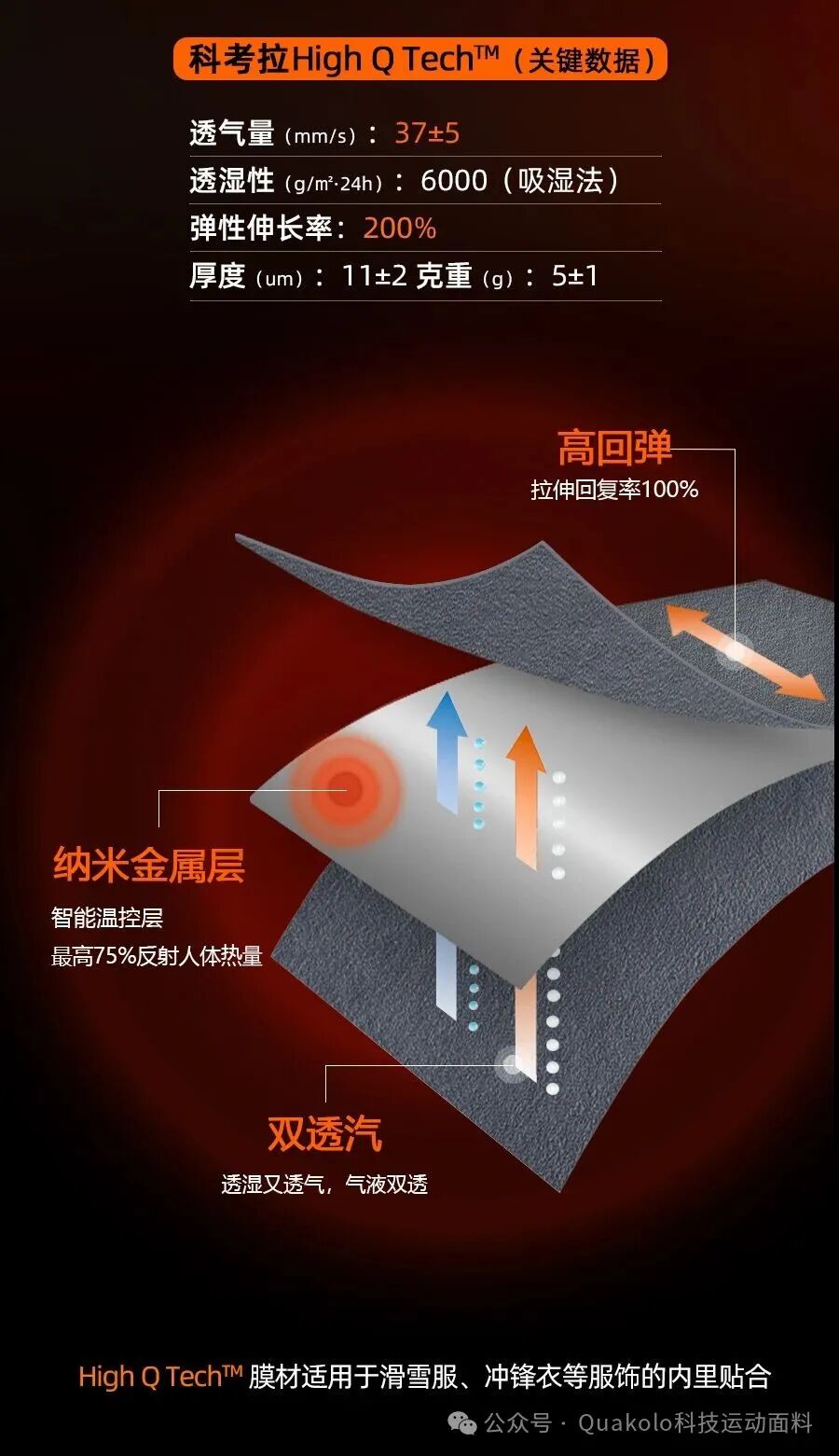
The lower a surface’s infrared emissivity, the less it radiates on its own and the more it reflects incoming infrared energy. High-Q Tex forms a nano-scale metallic layer on the substrate and applies that physics to fabric.
Emissivity and reflectance are complementary: 0.02 emissivity ≈ 98% infrared reflectance
Metal applied as a dot array with breathable gaps — the most common lining format, balancing reflection and moisture transfer.
A continuous metal layer for maximum reflectance; breathability relies on substrate porosity — used in sleeping bags and emergency insulation.
Metal layer sandwiched between two fabrics, avoiding skin contact and abrasion loss, balancing durability and hand feel.
The skin radiates heat mainly at 9–10µm, accounting for more than half of resting heat loss.
A metallic layer with emissivity of 0.02–0.05 reflects instead of absorbs, sending energy back toward the body.
The returned infrared is reabsorbed by the skin — effectively cutting radiative loss and raising thermal resistance without bulk.
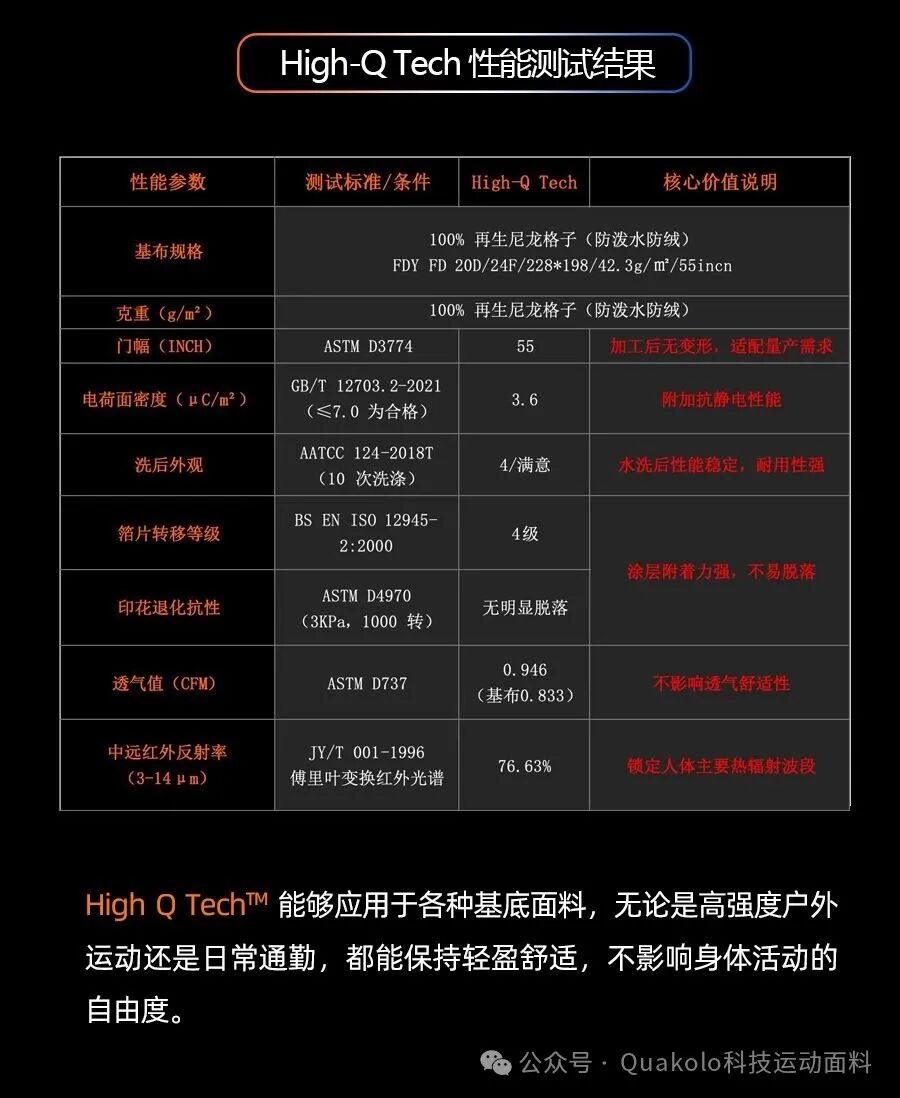
Typical ranges for the High-Q Tex heat-reflective series; substrate, metal and dot coverage can all be customized.
Full-surface coating reaches 95%+; dot formats scale with coverage
Typical range for silver / aluminium, far below ordinary textiles
54GSM is the typical lightweight spec for linings and light insulation
A nano-scale film; minimal metal use, no noticeable weight gain
Process dependent; laminated structures are the most durable
More coverage means more reflection; less coverage means more breathability
| Item | Lightweight lining | Laminated sandwich | Full-surface coat |
|---|---|---|---|
| Substrate | Polyester mesh / knit | Polyester + mesh laminate | Polyester woven / nonwoven |
| Finished weight | 35–55GSM | 55–80GSM | 45–70GSM |
| Far-IR reflectance | 70–85% | 85–92% | 92–98% |
| Moisture transfer | ≥8,000g/m²·24h | ≥5,000g/m²·24h | ≥3,000g/m²·24h |
| Wash durability | 15–20 washes | 25–30 washes | 10–15 washes |
| Typical use | Next-to-skin / running | Mid layer / skiing | Sleeping bags / emergency |
Ranges for reference; final values depend on substrate, coating process and swatch test reports.
The heart of a reflective fabric is its metal coating. Metals differ sharply in infrared reflectance, appearance, oxidation resistance, wash durability and cost — there is no single best choice, only the best match for a product position.
Use: Linings, sleeping bags, emergency blankets, entry warmth
Use: Premium linings, next-to-skin warmth, extreme cold
Use: Dark outerwear liners, long expeditions, weatherproof styles
Use: Flagship deep-cold styles, limited editions, luxury positioning
| Coating | Far-IR reflectance | Appearance | Oxidation | Wash | Relative cost | Position |
|---|---|---|---|---|---|---|
| Aluminium | 85–92% | Silver-white | Medium | Medium | 1.0× (benchmark) | Value |
| Silver | 95–98% | Bright silver | Medium | Good | 3–5× | High efficiency |
| Titanium | 70–85% | Dark grey | Excellent | Excellent | 4–6× | Durability |
| Gold | 96–99% | Gold | Excellent | Good | 20×+ | Flagship |
Relative cost is an estimate for comparable substrates and weights; actual pricing follows quotation.
The main cost is not the metal itself — the nano layer uses very little — but vacuum equipment depreciation, yield and protective finishing.
Indexed to aluminium = 1.0×, for positioning reference only
Aluminium dot lining first: controlled cost, sufficient reflectance, clear comfort gain with a mid layer.
Silver or titanium laminated sandwich for reflectance plus wash and weather durability — skiing and long treks.
Small gold areas as a visual and technical signature at collar or core panel, controlling cost while reinforcing identity.
A reflective layer is an amplifier, not a stand-alone insulator. It has to work with the still-air layer and the breathable structure — placed wrong, it barely helps.
Lightweight dot lining at the back panel: less radiative loss with low wind resistance, light and unclammy.
Laminated reflective layer inside the mid layer, paired with fleece for clear gains when standing still in the cold.
Dark titanium liner with weather and wash durability for long hikes and changeable conditions.
Full-surface coating for maximum reflectance in sleeping bag liners and emergency insulation.
Thin lining cuts bulk while keeping a clean look and low-temperature warmth.
Silver dots on a skin-friendly substrate: reflection, antibacterial property and hand feel together.
The metal must point at the body to return heat; facing outward reflects environmental radiation and blocks heat dissipation.
Reflection handles radiation; still air handles conduction and convection. Together they form complete insulation.
30–60% coverage is the balance point between moisture transfer and reflectance; lower it in high-output zones.
Provide an isolation lining to prevent abrasion loss and skin discomfort; next-to-skin surfaces must stay skin-friendly.
Coatings dislike repeated stretch and needle holes; route seams away from high-stress zones and use low-tension stitching.
Wash inside out, neutral detergent, no softener, no high-heat drying — this substantially extends reflectance life.
It belongs next to the body; facing out reflects outside heat and blocks dissipation.
Reflection amplifies; deep cold still needs loft or fleece to store warmth.
Full coverage kills breathability; garments need dots and zoned design.
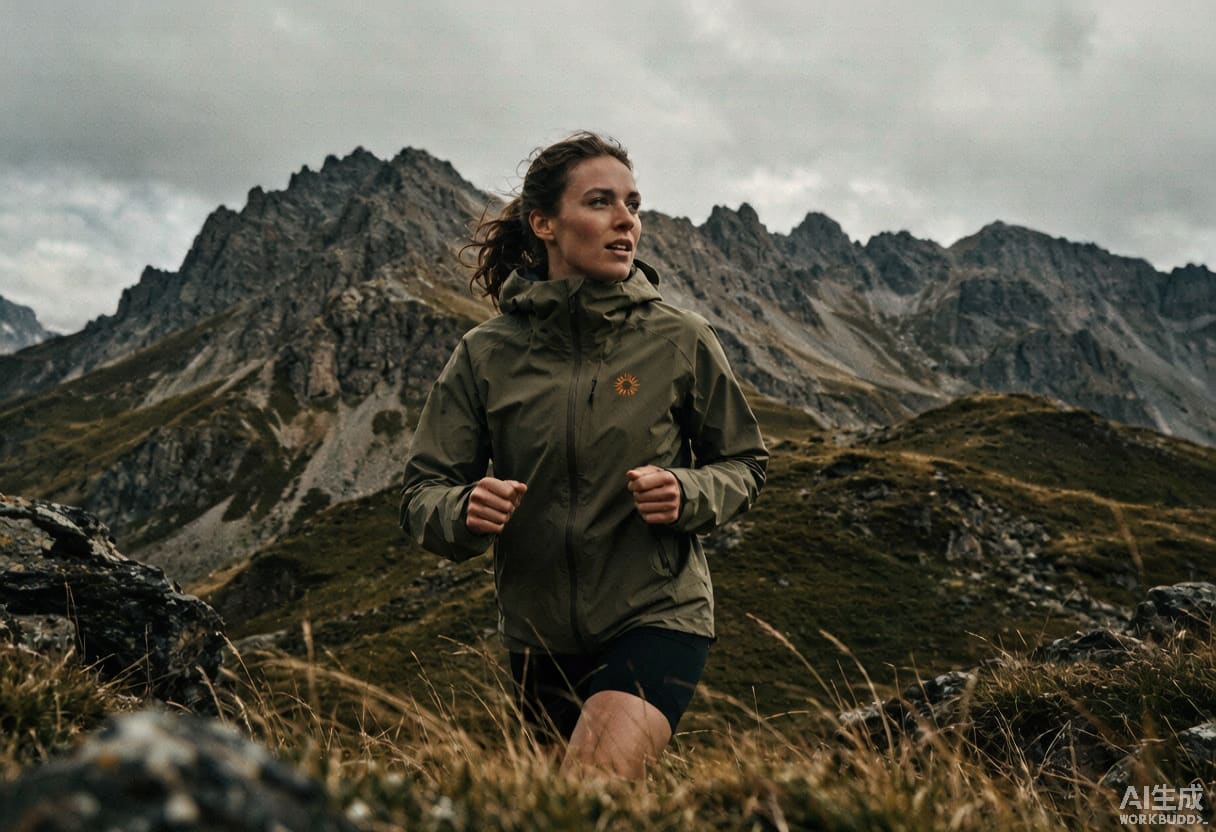
Light and low-drag; cuts radiative loss at rest and low speed
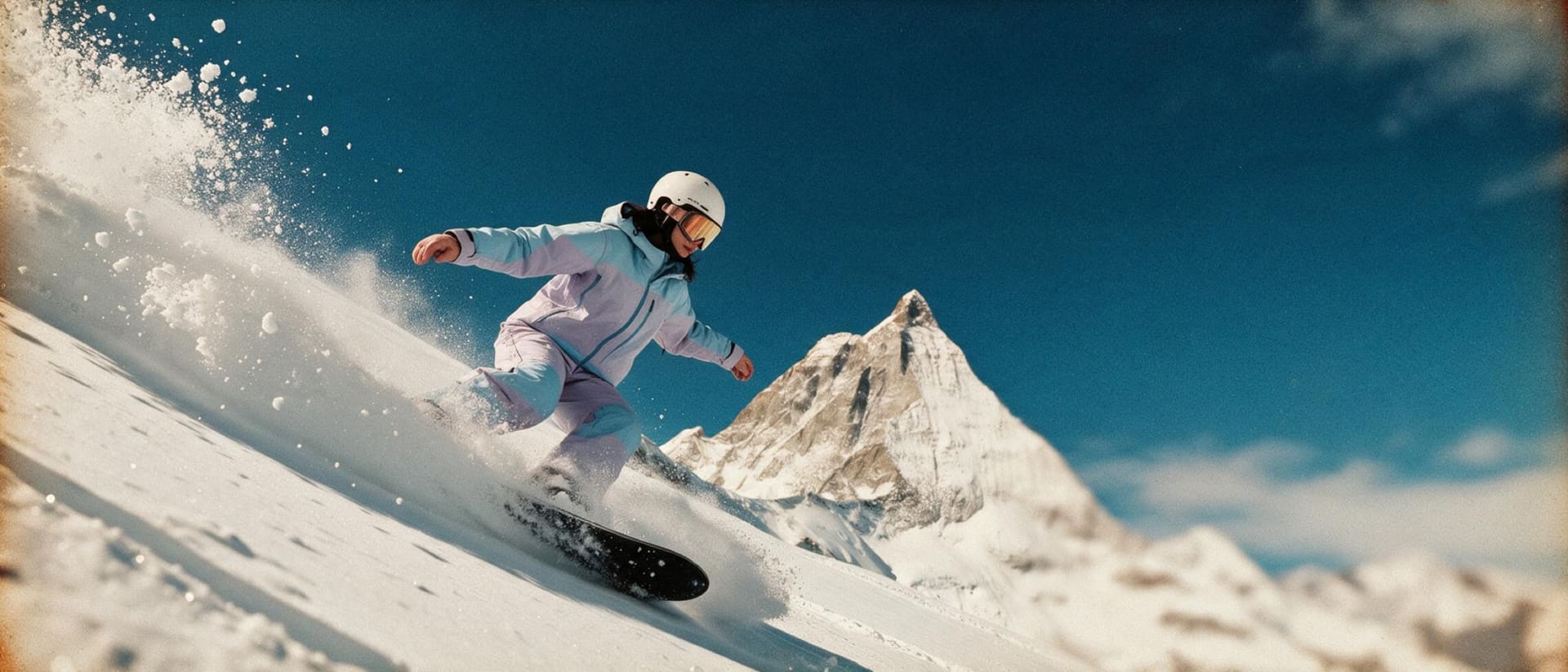
Long static periods in the cold; reflection plus mid layer works best
Day-night swings and long static stops demand stable durability
Conventional chemical silver plating needs heavy rinsing and plating steps, straining wastewater and heavy-metal treatment. High-Q Tex uses vacuum dry coating to cut the burden at the process source.
Magnetron sputtering or vacuum deposition inside a closed chamber produces no plating wastewater or heavy-metal sludge.
The nano layer is only 0.05–0.2µm thick; metal consumption per square meter is far below conventional metallized fabric.
rPET recycled polyester substrates are available, pairing with brand take-back programs to lower carbon footprint.
Mono-material structures ease recycling; laminated versions can be designed for disassembly on request.
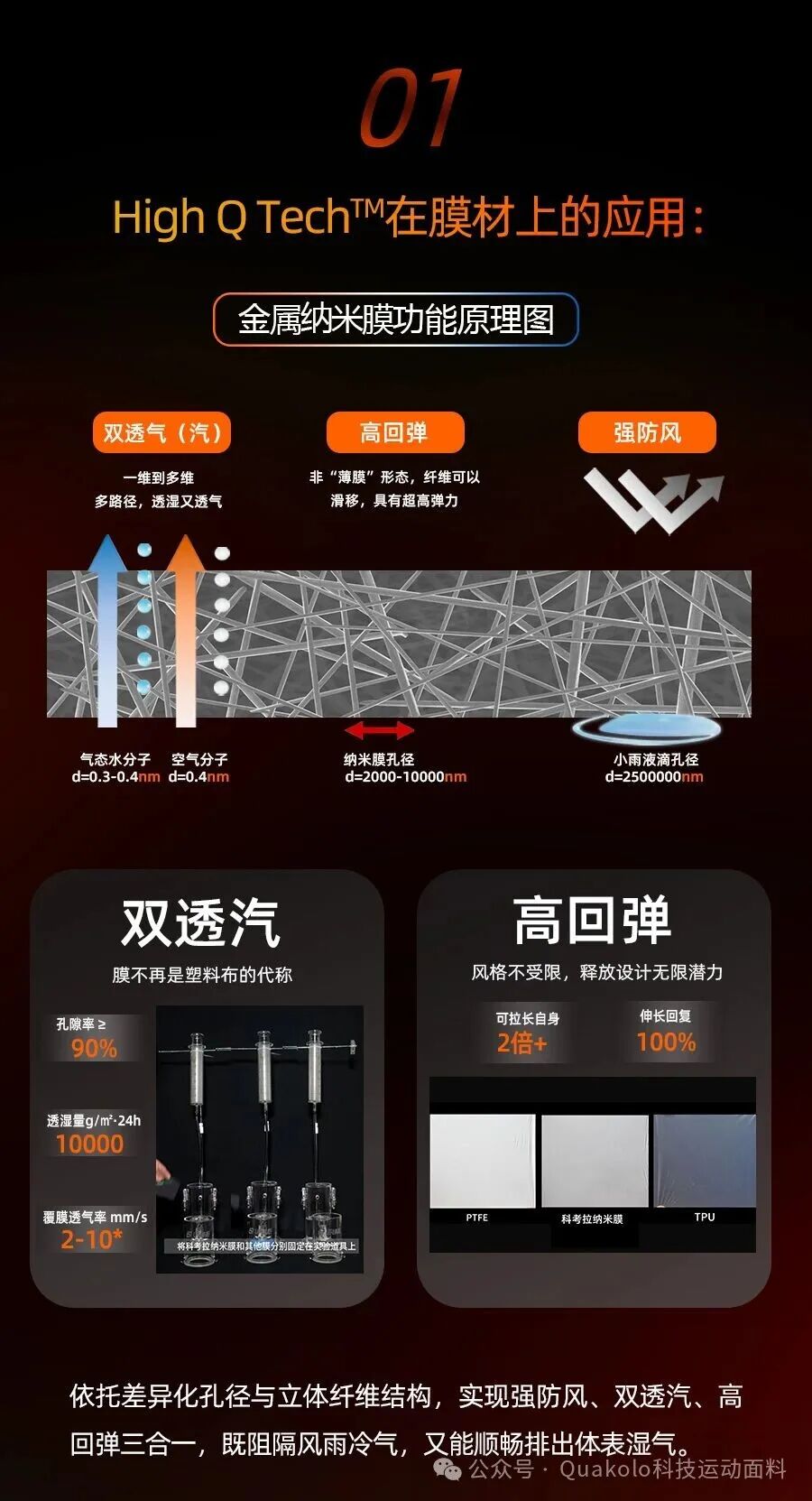
No. Garment-grade reflective layers are dot or micro-porous formats, leaving 40–70% of the area uncoated for moisture transfer — typical moisture permeability is 5,000–8,000g/m²·24h. Breathability is governed mainly by substrate structure and the number of laminate layers, and we balance moisture transfer against reflectance during development.
In like-for-like tests at equal weight and substrate, adding a reflective layer raises thermal resistance by roughly 20–45% depending on metal and coverage. In practical terms a 54GSM reflective lining feels close to a noticeably heavier fleece at low activity. Final numbers follow the swatch thermal-resistance report.
The reflective layer itself does not waterproof; it addresses radiative loss. Water protection requires a DWR finish or a membrane laminate. We offer both combinations: reflective + DWR, and reflective + waterproof-breathable membrane.
Vacuum coatings bond firmly; after 15–30 normal washes reflectance typically stays above 85%, with laminated structures the most durable. Wash inside out with neutral detergent, avoid softeners and high-heat drying to extend life further.
Vacuum deposition creates a continuous nano-scale film, not a metal powder coating, so it does not shed under normal use. The reflective layer normally does not touch the skin directly — a skin-friendly lining isolates it — and substrates and finished goods can be tested to OEKO-TEX® standards for next-to-skin safety.
Warmth requires the reflective face to point inward. Summer products should turn the reflective layer outward or omit it to reflect external heat. One fabric cannot both trap heat in winter and reject it in summer; design by season.
Low-temperature ironing on the reverse side is fine; avoid direct high heat on the metal face. High-temperature tumble drying and hot pressing are not recommended — heat accelerates oxidation and substrate shrinkage.
They solve different problems: down traps a large volume of still air for extreme cold at rest; fleece stores warmth in its pile for active mid-layer use; a reflective layer returns body heat at the lowest weight and amplifies. The best answer is usually reflective lining plus fleece or fill, not replacement.
Relative to an ordinary polyester lining, aluminium options run roughly 2–3× and silver or titanium 4–8×, depending on substrate and coverage. Typical MOQ starts around 500–1,000 meters, sampling usually takes 7–10 days, and pricing is confirmed after process and color approval.
Representative production swatches from the High-Q Tex heat-reflective series, with composition, width and weight. Physical samples available on request.
YK3385Heat-Reflective Coated Woven Fabric
Tell us your category, target temperature range and cost band. We will recommend a combination of substrate, metal coating, dot coverage and laminate structure, with tested swatches.